Are LEGO Modular Buildings a Good Investment?
If you have spent any time in the LEGO collecting world, you have probably heard someone claim that LEGO modular buildings investment returns beat the stock market. It is a bold statement, and like most bold statements it deserves a closer look. Modular buildings are the crown jewels of the Creator Expert and Icons street series, and they have built one of the most consistent appreciation track records in the entire LEGO secondary market. But "consistent" is not the same as "guaranteed," and understanding the difference is what separates a smart collector from someone who overpaid at the wrong time.
This guide walks through why modulars behave the way they do, what the historical numbers actually show, which sets make the most sense to buy today, and where the real risks hide. The goal is an honest picture, not hype.
Why Modular Buildings Are Strong Investments
The case for LEGO modular buildings investment rests on a few structural advantages that most other themes simply do not have. First, there is scarcity by design. LEGO releases roughly one modular building per year, and each one stays in production for only a limited window before it is retired. When a set leaves shelves for good, new supply stops while demand from collectors, decorators, and adult fans keeps climbing.
Second, modulars appeal to adults with disposable income rather than to children. This is the demographic that keeps buying long after a set is retired, and they tend to keep boxes sealed. A sealed, unopened set in clean condition is the gold standard for resale, and modulars attract exactly the kind of buyer who cares about that.
Third, the modular line has a display culture. Fans build entire streets, so owning one modular creates demand for the next. That network effect props up prices across the whole series and gives newcomers a strong incentive to hunt down older, retired sets to complete their block. Few other LEGO themes generate that kind of self-reinforcing demand.
Finally, part count and price point matter. Modulars are large, expensive sets to begin with, which means the retail price already reflects premium positioning. When they appreciate, they do so from a high base, and the dollar gains per set can be meaningful.
The Modular Track Record
Nothing makes the argument better than the actual history of the line. These are the flagship examples collectors point to, with honest, qualified ranges rather than cherry-picked peaks.
Cafe Corner (10182) was the very first modular, released in 2007 at a retail price of around 140 dollars. It is the poster child for the entire category. Sealed copies have traded in the low thousands of dollars, with figures often quoted in the 2,000 to 4,000 dollar range depending on condition and box quality. Even used, complete sets command a strong premium. No modular since has matched that multiple, partly because early print runs were small and few buyers thought to keep them sealed.
Green Grocer (10185), from 2008, followed a similar path. Retailing near 150 dollars, sealed examples have reached the four-figure range, commonly cited somewhere between 1,500 and 3,000 dollars. Its distinctive green facade and early rarity keep it near the top of most want lists.
Pet Shop (10218), released in 2011 around 150 dollars, is a more moderate but still solid performer. Sealed sets have traded in the several-hundred to roughly 700 dollar range in recent years. It is a good illustration that not every modular becomes a four-figure trophy, but strong appreciation is still the norm.
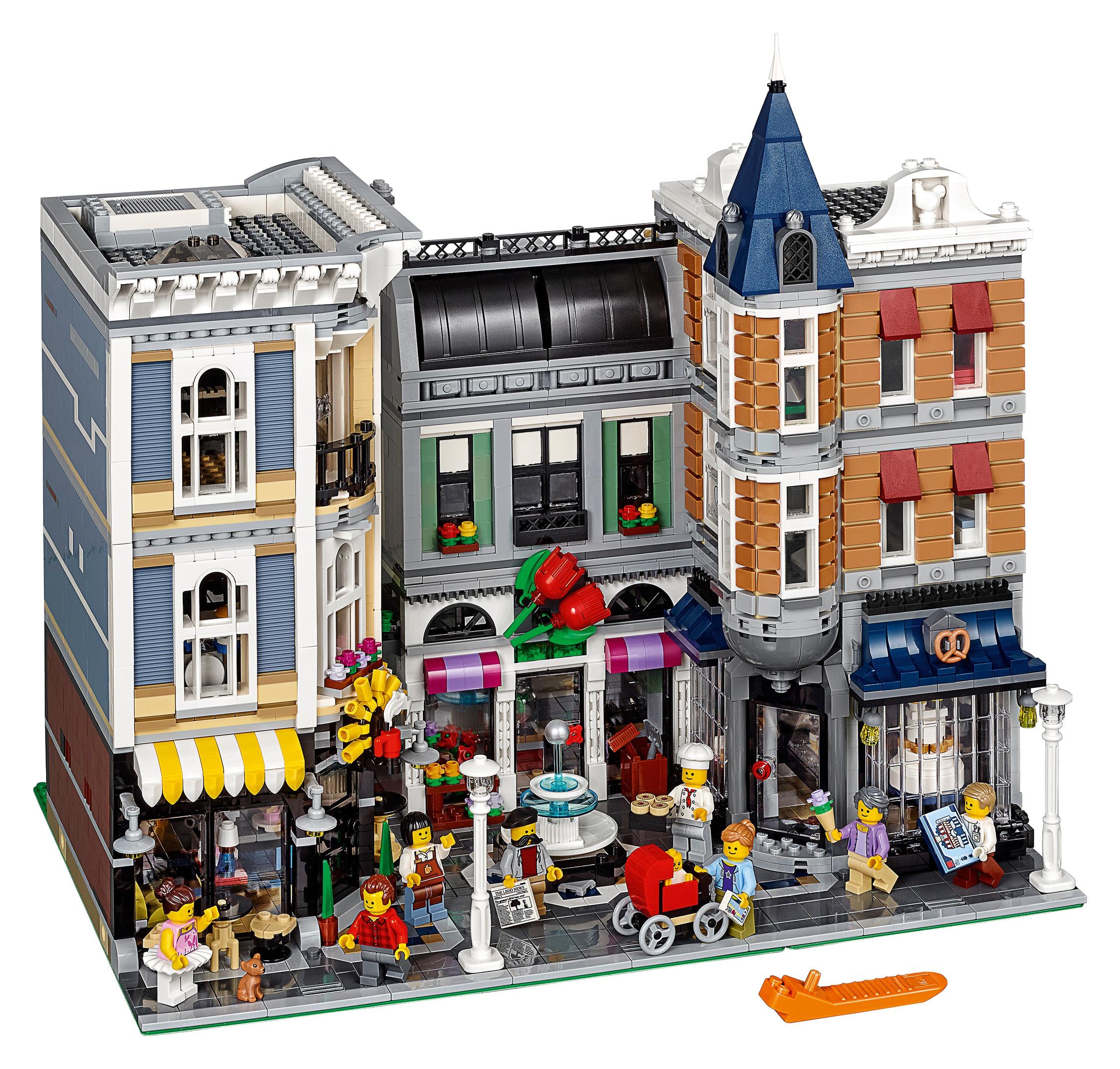
Assembly Square (10255), the 2017 tenth-anniversary set, retailed near 280 dollars and is one of the largest modulars ever made. After its retirement it has generally traded above retail, often in the 400 to 550 dollar range. It shows that even a big, expensive, widely produced set can appreciate once supply dries up.
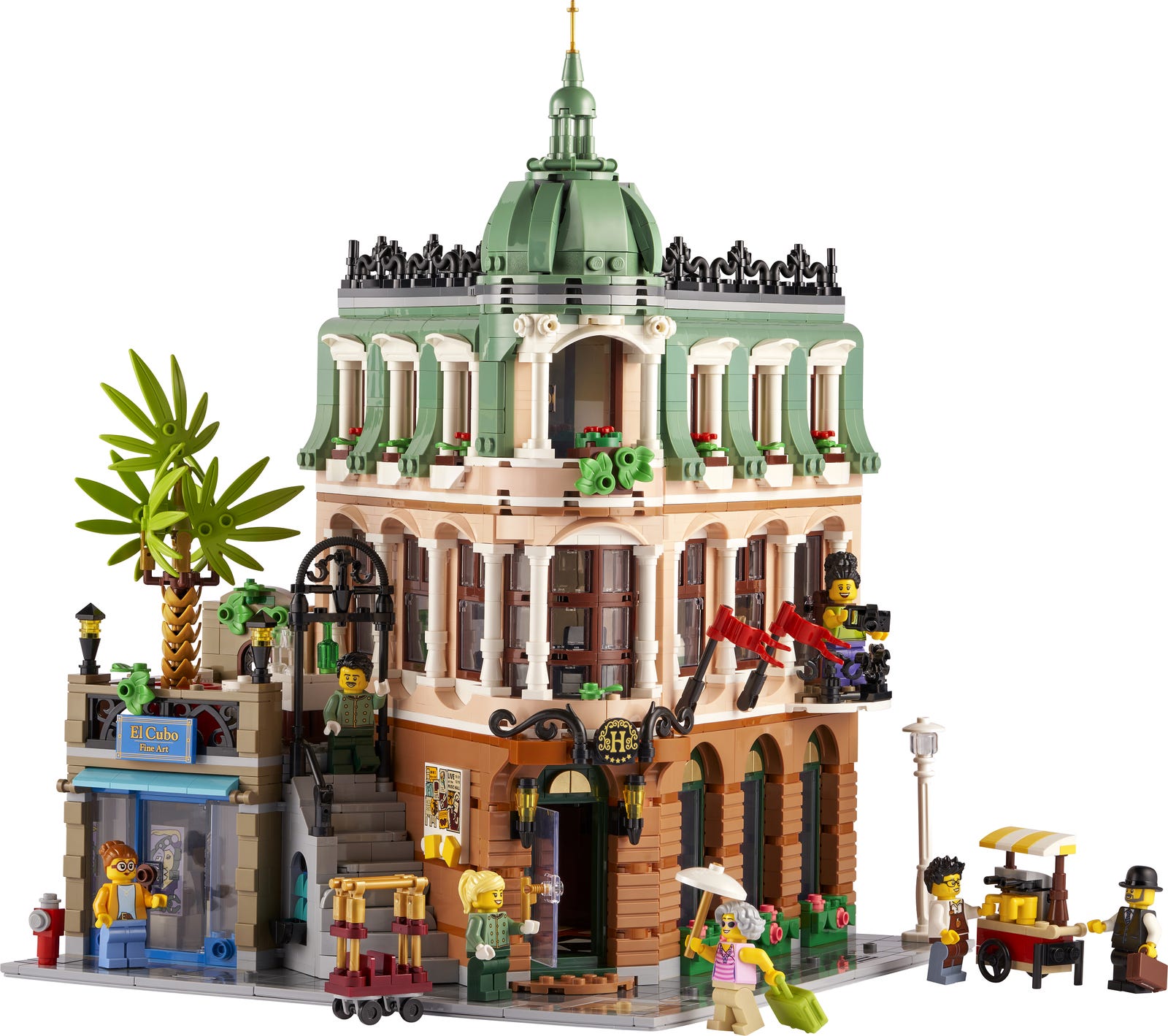
Boutique Hotel (10297), released in 2022 near 200 dollars, is a more recent example still early in its life cycle. Post-retirement pricing has moved modestly above retail so far, and it serves as a reminder that the biggest gains usually take years, not months, to materialize.
The pattern is clear. Older sets from the late 2000s produced the largest returns because supply was tiny and few people treated them as investments. Newer sets appreciate more gently, from a higher retail base, over longer horizons.
It is worth stressing that these ranges are not guarantees. Prices swing with condition, timing, and how many sealed copies happen to hit the market in a given month. Two identical sets can sell weeks apart for hundreds of dollars of difference based on box quality alone. That variability is exactly why watching actual sales data matters more than trusting a single headline number you saw in a forum thread.
What to Buy Today
You cannot buy Cafe Corner at retail anymore, so the practical question is what to acquire now. The most reliable strategy is to buy the current modular near release and hold it sealed until well after retirement. Modulars retire roughly two to three years after launch, so a set bought at release typically needs a five-year-plus horizon before the interesting appreciation begins.
Focus on sets bought at or below retail. Discounts from sales, points programs, or promotions directly improve your eventual return, because your cost basis is lower. Buying a modular at full price and hoping it doubles is a slower game than buying it at 20 percent off and letting the same appreciation ride on a smaller outlay.
Condition is everything. Keep the set sealed, store it flat and away from sunlight and humidity, and protect the box corners. A crushed box can cut resale value substantially even if the contents are perfect. If you plan to build and display, accept that you are buying for enjoyment first and any residual value second.
Spreading purchases across several modulars over several years smooths out timing risk. Because the line is predictable, one new set per year, you can build a small portfolio without trying to guess a single perfect entry point. Tools like BrickGains let you track by theme so you can see your whole modular block in one place and monitor how each set is performing over time.
Should you buy two of each modular, one to build and one to store sealed? Many serious collectors do exactly that. It doubles your cost basis but lets you enjoy the display while still holding a sealed asset for the long run. Whether that makes sense depends on your budget and how much you value the build itself. If you only want the investment, a single sealed copy is the cleaner play. If you love the hobby, buying a second copy to display costs you the entertainment while your sealed copy quietly ages.
The Risks You Should Weigh
Honest investing means taking the downside seriously. The first risk is time. LEGO appreciation is slow. The eye-popping Cafe Corner numbers took more than a decade to build. Your money is illiquid and inflation-exposed while you wait, so modulars are a patient, multi-year play, not a quick flip.
The second risk is reissues and remakes. LEGO has occasionally revisited concepts, and any hint that a beloved set or theme might return can soften prices for existing copies. Nothing is guaranteed to stay retired forever in spirit, even if the exact set number does.
The third risk is that past returns are not future promises. The extraordinary gains of the first modulars came from a specific set of conditions: tiny print runs, low awareness, and a young collector market. Today everyone knows modulars appreciate, more people hoard them sealed, and larger production runs mean more supply. That extra supply likely compresses future percentage returns compared to the pioneers.
The fourth risk is practical friction. Selling takes effort, marketplace and shipping fees eat into gains, large boxes are expensive to ship and easy to damage in transit, and you carry storage and insurance considerations for years. Factor those real costs into any return you project. A set that "doubled" on paper delivers less after fees and shipping.
Finally, treat LEGO as an alternative asset, not a core holding. It is uncorrelated fun that can appreciate, but it should sit at the edge of a diversified financial picture, not the center of it.
Key Takeaways
- Modular buildings have the strongest and most consistent appreciation track record in the LEGO secondary market, driven by scarcity, an adult buyer base, and a self-reinforcing display culture.
- Early sets like Cafe Corner (10182) and Green Grocer (10185) reached four figures, while Pet Shop (10218), Assembly Square (10255), and Boutique Hotel (10297) show more moderate but still positive returns.
- The best practical strategy is to buy the current modular at or below retail, keep it sealed in top condition, and hold for five years or more.
- Future percentage returns will likely be smaller than the pioneers because awareness is higher and production runs are larger.
- Real risks include long time horizons, illiquidity, possible reissues, and selling costs, so treat modulars as a patient alternative asset, not a core investment.
- Use data rather than anecdotes: track your sets by theme so you can see how each one is actually performing before you buy or sell.