Is LEGO a Good Investment in 2026? What the Data Really Says
If you have ever pulled a retired LEGO set off the shelf and wondered whether it is worth more than you paid, you are asking the right question. Whether LEGO is a good investment in 2026 is no longer a fringe curiosity. It is a serious question for collectors, hobbyists, and alternative-asset investors alike. The short answer is that LEGO can be a good investment, but only under specific conditions and with realistic expectations. The internet is full of headlines claiming plastic bricks beat the stock market, and while there is a kernel of truth there, the full picture is more nuanced. In this article we look at what the data really says, which sets tend to appreciate, the risks people ignore, and how to make smart decisions instead of hopeful guesses.
Is LEGO a Good Investment in 2026? The Honest Answer
Let us be direct. LEGO is a good investment for people who treat it like one, and a poor investment for people who treat it like a lottery ticket. The sets that appreciate meaningfully share common traits: they are retired, they were popular during their production run, they have strong theme loyalty, and they were kept in pristine, sealed condition. Random sets bought on impulse and stored in a damp garage rarely deliver returns.
Historically, a well-chosen basket of retired sets has often returned somewhere in the range of 20% to 40% over several years, with standout sets doing far better and plenty of others barely keeping pace with inflation. Those averages hide enormous variation. For every set that doubles in value, there are many that appreciate slowly or stagnate. Understanding that distribution is the difference between a disciplined investor and someone who overpaid for hype.

The Case for LEGO as an Investment
There are real structural reasons LEGO holds and grows value better than most consumer products. First, LEGO deliberately retires sets. Once a set leaves production, supply is fixed and can only shrink as sealed boxes get opened, damaged, or lost. Demand, meanwhile, often persists or grows as fans who missed a set during its run try to buy it later. Fixed supply plus steady demand is the classic recipe for price appreciation.
Second, LEGO has one of the strongest brands in the world, with deep emotional attachment across generations. Adult fans of LEGO, often called AFOLs, have significant purchasing power and are willing to pay premiums for nostalgia and display pieces. Third, licensed themes like Star Wars, Marvel, and Harry Potter add another layer of collectible demand tied to the popularity of those franchises.
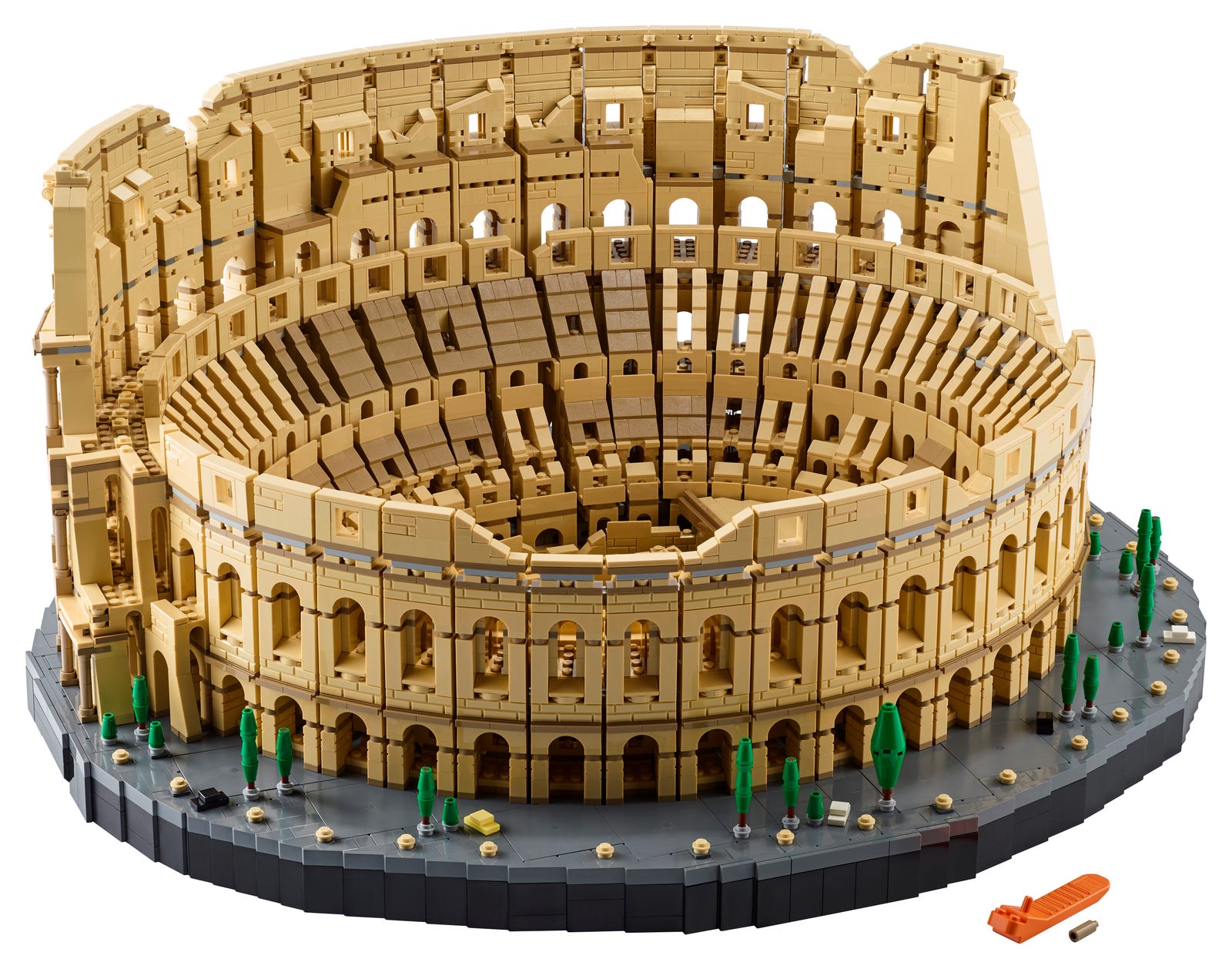
Real examples make the case concrete. The retired Ultimate Collector Series Millennium Falcon, the Colosseum, and the Taj Mahal are frequently cited because they appreciated strongly after retirement, in some cases multiplying well beyond their original retail price over the years. These are not cherry-picked flukes so much as illustrations of the pattern: large, iconic, display-worthy sets from beloved themes tend to hold up best.
Which LEGO Sets Actually Appreciate?
Not all bricks are created equal. If you want to understand whether LEGO is a good investment for your specific situation, focus on the categories that history rewards.
- Ultimate Collector Series (UCS) sets: Large, detailed, adult-oriented Star Wars models that command loyal demand and display value.
- Modular Buildings: The Creator Expert and Icons town series has a strong track record of steady appreciation after retirement.
- Iconic landmarks and large architecture: Sets like the Colosseum and Taj Mahal appeal to a broad, non-kid audience and are treated as showpieces.
- Licensed exclusives: Limited or promotional sets tied to popular franchises, especially when distribution was restricted.
- Retired seasonal and collectible sets: Winter Village, certain Ideas sets, and fan-voted designs that had limited runs.
The common thread is scarcity plus desirability. A small, generic set with millions produced will almost never appreciate, no matter how long you hold it. A large, distinctive set from a passionate fanbase, produced in comparatively modest numbers and then retired, is where the real potential lives.
What the Data Really Says About LEGO Returns
You will see bold claims that LEGO outperforms stocks, gold, and bonds. Treat these with healthy skepticism. Studies that report high average annual returns typically look at a curated selection of retired sets on the secondary market, which introduces survivorship bias. The sets that failed to appreciate, got liquidated, or were never resold quietly drop out of the sample.
A more grounded reading of the data is this: the best retired sets have delivered excellent returns, often well above typical stock-market averages, while the median set delivers something more modest. Realistic expectations matter. If you buy carefully, hold patiently for several years past retirement, and keep condition perfect, returns in the range of 8% to 15% per year on a well-chosen portfolio are plausible, with occasional standout sets far exceeding that. Anyone promising guaranteed doubling in a year is selling a story, not analyzing data.
The other thing the data makes clear is time. LEGO is not a quick flip in most cases. Appreciation usually accelerates a year or two after a set retires and continues over a horizon of five years or more. This is a patient asset, not a day-trading vehicle.
The Risks and Costs Most People Ignore
Any honest answer to whether LEGO is a good investment has to weigh the downsides, because they are real and often underestimated.
- Storage and condition risk: Value lives in sealed, undamaged boxes. Crushed corners, sun fading, humidity, and pets can erase your premium instantly. Proper storage takes space and care.
- Liquidity: Selling a large set can take time and effort. You are not clicking a sell button like a stock. You list, negotiate, package, and ship, sometimes over weeks.
- Fees and shipping: Marketplace commissions, payment processing, and the cost of shipping a heavy box all eat into your margin.
- Capital lock-up: Your money sits idle in inventory for years with no dividends or interest.
- Counterfeits and market shifts: Fake sets, reissues, and changing fan tastes can undercut prices you assumed were safe.
None of these are dealbreakers, but they explain why casual buyers are often disappointed. The people who profit treat LEGO investing like a small business with inventory, records, and discipline, not like a magic money machine.
How to Check a Set's Real Value Before You Buy
The single biggest mistake new LEGO investors make is guessing at value instead of checking it. Retail price tells you almost nothing about what a set is worth on the secondary market, and a random completed listing can be an outlier. You need live, aggregated pricing from where collectors actually trade.
This is exactly the gap tools like BrickGains are built to close. Instead of eyeballing a few listings, you can see the real resale value of a set using live BrickLink prices, understand whether it is trending up or down, and judge whether the current asking price leaves room for appreciation. You can check a set free before committing a single dollar, which turns a gut-feel purchase into an evidence-based decision.
When you evaluate a potential buy, look at three things: the current market price versus retail, how close the set is to retirement, and the historical price direction. A set that is about to retire, still available near retail, and already trending upward is a far better candidate than one that peaked years ago.
Tracking ROI and Building a Real LEGO Portfolio
Buying is only half the discipline. If you are serious about LEGO as an investment, you need to know what your collection is actually worth at any moment, not what you hope it is worth. Prices move constantly, sets retire on their own schedules, and the window to sell at a peak can be short.
A portfolio approach beats scattered one-off purchases. Spread across a few themes and set types so you are not betting everything on one franchise. Keep clear records of what you paid, when you bought, and your target sell window. Watch for retirement announcements and price alerts so you are acting on signals rather than reacting late. Tracking your ROI across the whole collection lets you see which sets are carrying their weight and which are dead capital you should liquidate.
This is where ongoing tracking pays off. Rather than updating a spreadsheet by hand, you can let a tool monitor live values, flag retirement and price movements, and show your collection's return in one place. If you want that kind of visibility, you can track your collection and let retirement and price alerts tell you when to move.
So, Is LEGO a Good Investment for You?
Here is the practical conclusion. LEGO is a good investment if you enjoy the hobby, buy selectively, hold patiently, store carefully, and use real data instead of hype. It is a poor investment if you expect quick riches, buy random sets, ignore condition, or fail to track values. For many collectors, the ideal outcome is a hobby that also holds and grows value, which is a genuinely appealing combination compared to most things you can buy for fun.
Think of it as a patient, hands-on alternative asset. It will not replace a diversified retirement account, and it should not be money you cannot afford to tie up for years. But as a supplementary asset that you actually enjoy owning, a carefully built LEGO portfolio has a real, defensible case in 2026.
Key Takeaways
- LEGO can be a good investment when you buy retired or soon-to-retire sets from popular themes and keep them sealed and pristine.
- The best sets have appreciated strongly, but average returns are more modest, often in the range of 8% to 15% per year on a well-chosen portfolio over several years.
- UCS Star Wars, Modular Buildings, large landmarks, and licensed exclusives have the strongest track records.
- Real risks include storage, liquidity, fees, and capital lock-up, so treat it like inventory, not a lottery ticket.
- Never guess at value. Check live resale prices before buying and track your ROI over time.
- Tools like BrickGains let you check a set's real value for free and track your whole collection with retirement and price alerts.