The Cheapest Way to Start a LEGO Investment Portfolio

Everybody has seen the headlines about a retired LEGO set that sold for triple its original price, and it is tempting to think you need a big bankroll to get in on it. You do not. Lego investing on a budget is not only possible, it is arguably the smartest way to learn the game before you risk real money. This guide walks you through how to start a LEGO investment portfolio with the smallest possible outlay, which cheap sets tend to hold and grow their value, and how to avoid the beginner mistakes that quietly eat your profits.
The core idea is simple. You buy sets at or below retail, hold them sealed while they are on shelves and just after they retire, then sell them into rising demand once they are no longer produced. You do not need rare Star Wars UCS ships to make this work. Small, cheap, and boring can be a very good place to begin.
Start small and treat it like a skill, not a jackpot
The biggest advantage of starting small is that your tuition is cheap. Every investor makes mistakes early: buying at the wrong time, misjudging demand, or falling for hype. If those mistakes happen on a $30 set instead of a $300 one, they barely sting and you still keep the lesson.
A realistic first budget is $100 to $300. That is enough to buy three to eight low-cost sets, spread across a couple of themes, so you can watch how different products behave over the following months. Think of this first batch as a training portfolio. Your goal is not to get rich in ninety days. It is to understand storage, timing, condition, and how selling actually works before you scale up.
Keep it disciplined from day one. Buy only sets you can store flat, unopened, and away from sunlight. Track what you paid, the date, and where you bought it. This habit alone puts you ahead of most casual flippers who forget their cost basis and later have no idea whether they actually made money. Photograph the sealed box and the receipt when it arrives so you have proof of condition and cost if you ever need it at sale time.
The best low-cost sets to flip
When you are working with a small budget, the sweet spot is affordable sets with broad, non-childish appeal. Adults buy these for themselves, display them, and repurchase them as gifts, which keeps demand steady long after retirement. A few well-known examples that fit a beginner budget:
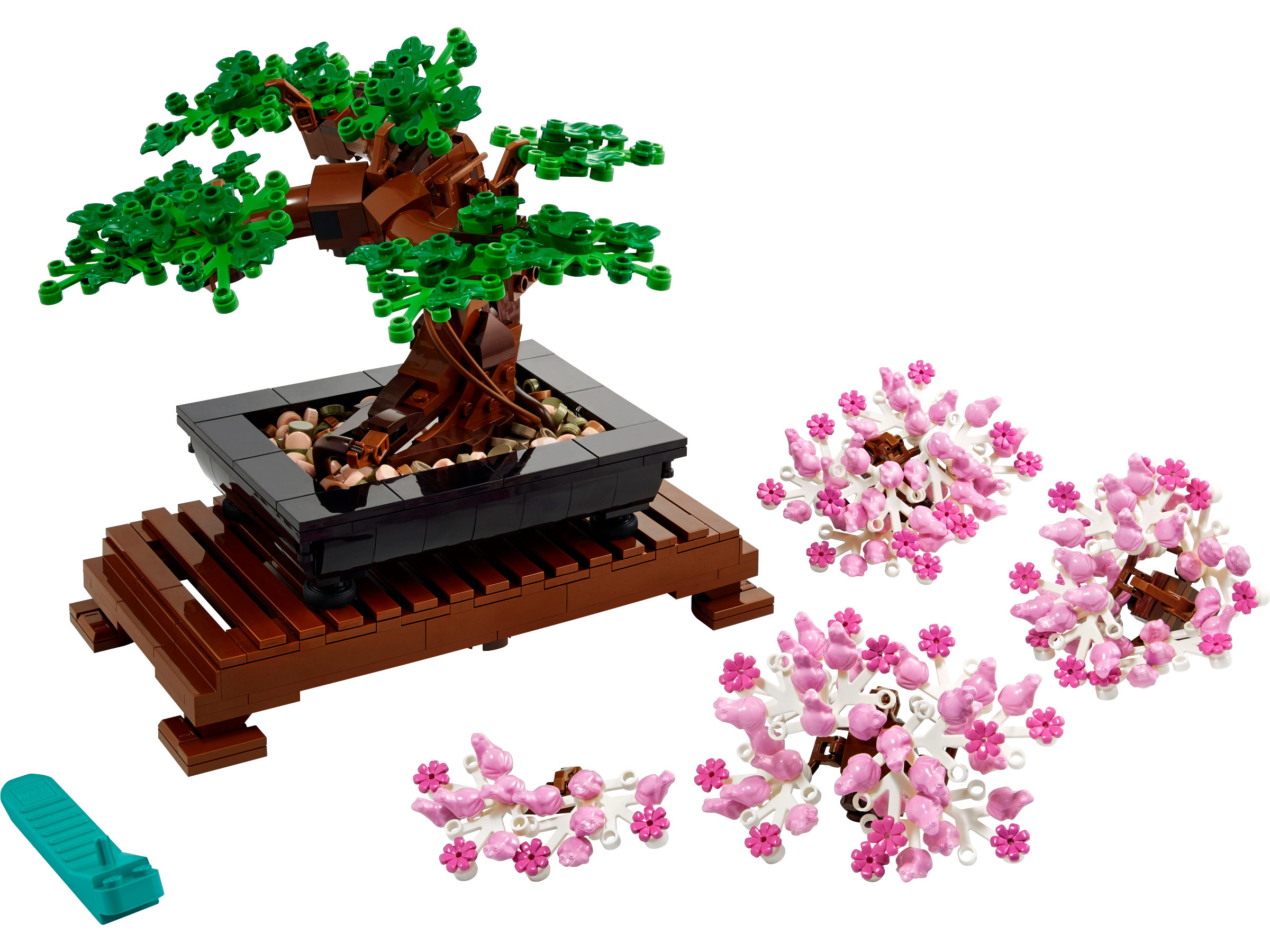
- Bonsai Tree (10281): A small LEGO Icons set with huge display appeal. It sits on desks and shelves in homes that otherwise own no LEGO, which widens the buyer pool well beyond hobbyists.
- Flower Bouquet (10280): The set that basically created the adult botanical category. It is given as a gift year-round, and gift demand does not care much about price once a set is retired.
- Other botanicals and small Icons sets under $50: Wildflower and flower arrangement style sets, small vehicles, and compact display builds tend to be easy to store, easy to ship, and easy to sell.
Notice the pattern. These are cheap, universally likable, easy to store, and cheap to ship. Small sets cost less in postage and are less likely to arrive damaged, which protects your margin on lower-priced flips. A crushed corner on a $40 box can wipe out your entire profit, so light and sturdy matters more than beginners expect.
Before you commit cash to any set, look at its actual price history and retirement status rather than guessing. A tool like BrickGains lets you check a set for free and see whether the numbers support the hype. You can check a set free and confirm it is trending the right way before you buy.
Buy at a discount and stack every advantage
Your profit is largely decided at the moment you buy, not the moment you sell. If your neighbor pays full retail and you pay 20 percent less, you are 20 percent ahead before the set even retires. On a budget, discipline about entry price is your single biggest edge.
Practical ways to lower your buy price:
- Wait for sales. Third-party retailers regularly discount LEGO 20 to 30 percent. Buying popular retiring sets on sale instead of at full price dramatically improves your eventual return.
- Use double VIP points periods. When the official store runs double points promotions, you earn store credit worth roughly 10 percent of your spend. Reinvesting that credit into more inventory is essentially a free discount on your next purchase.
- Buy gift-with-purchase bundles smartly. Sometimes a promotional freebie is itself a small, sought-after set. Factoring that in can turn a normal buy into a better one.
- Stack where you can. Sale price plus points plus a gift-with-purchase on the same order is how experienced budget investors quietly beat the market.
Every dollar you save at purchase is a guaranteed return. Price appreciation is a hope. A discount is a fact. Prioritize the fact.
Avoid overpriced hype
The fastest way to lose money as a beginner is to chase whatever everyone is already talking about. By the time a set is all over social media as the next big thing, the easy gains are usually gone and the price already reflects the excitement. You end up buying high and hoping someone buys higher.
Be especially cautious with these traps:
- Sets already selling above retail while still in production. If it is still being made and already marked up, you are paying a premium for a supply that has not actually stopped yet.
- Licensed sets you are only buying because of the brand. Popular licenses can work, but they are often the most hyped and the most competitive, which compresses your margin.
- Massive expensive sets as a first purchase. A $400 centerpiece ties up your whole budget in one bet and one storage headache. Spread that money across several small sets instead.
Honest math matters here. Sealed sets that appreciate well typically climb over a few years, not a few weeks. If a set is already priced as if it retired long ago, the market has done your job for you and left little room to profit.
Reinvest your profits to compound the portfolio
The real power of budget LEGO investing shows up when you recycle your gains instead of spending them. Sell a set, take the original cost plus profit, and roll it into two more sets. Do that consistently and a modest $200 starting stake can grow into a much larger inventory over a couple of years without you ever adding fresh money.
A simple reinvestment loop looks like this. Buy small at a discount, hold through retirement, sell into demand, then use the proceeds to buy a slightly larger or wider batch. Each cycle your buying power grows, your experience deepens, and your average mistakes shrink. This is how patient beginners quietly build a portfolio that would have felt out of reach on day one.
To keep the loop honest, record your real returns and let the winners guide your next buys. If you want a structured place to log what you own and watch how each pick performs, you can track your first picks and make your reinvestment decisions on data instead of gut feeling.
Keep your expectations realistic
Budget LEGO investing works, but it is a slow, steady game, not a lottery ticket. Most quality sets appreciate somewhere in the range of a few percent to low double digits per year after retirement, and it can take a year or two after a set leaves shelves before prices really move. Storage takes space. Selling takes time and fees. Not every pick wins.
Treat it as a patient side portfolio rather than a paycheck. Sealed LEGO has historically held value better than many mainstream assets over long periods, which is exactly why it is worth doing well. Buy sensibly, store carefully, sell patiently, and let time and discipline do the heavy lifting. Start with $100, learn the mechanics on cheap sets, and scale up only once your own results prove the approach. There is no shame in starting tiny, and the investors who last are almost always the ones who respected small numbers first.
Key takeaways
- You can start a LEGO investment portfolio with as little as $100 to $300 by buying several small, cheap sets.
- Small Icons and botanical sets like Bonsai Tree (10281) and Flower Bouquet (10280), plus sets under $50, are beginner-friendly because they are easy to store, cheap to ship, and widely loved.
- Your profit is set at purchase: buy on sale, use double VIP points, and stack promotions to lower your entry price.
- Avoid hyped sets already selling above retail, and do not sink your whole budget into one expensive centerpiece.
- Reinvest your profits to compound your buying power over time.
- Keep expectations realistic: returns are gradual and measured in years, not weeks.
- Check a set's price history before buying and track your picks with data so you are not guessing.